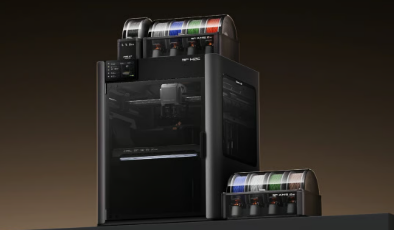
The rise of desktop 3D printing has introduced a new era of precision and safety for professional and hobbyist users alike. Among the latest innovations, the enclosed safety design has become a critical feature for both performance and user protection. The Bambu Lab H2C printer stands out for integrating this design seamlessly, offering a controlled environment that enhances print quality while minimizing risk.
Why is an enclosed design important for 3D printing?
An enclosed build area plays a crucial role in temperature regulation, which directly affects the quality and consistency of printed models. By maintaining a stable internal temperature, the printer reduces warping and layer separation, especially when working with high-performance materials. Additionally, it limits exposure to fumes and particulate matter, creating a safer workspace, particularly in professional environments.
How does the Bambu Lab H2C ensure user safety?
The printer incorporates a fully enclosed chamber with reinforced materials that prevent accidental contact with heated components. Integrated sensors monitor both temperature and print activity, automatically pausing operations if irregular conditions are detected. This proactive safety system protects users from potential hazards without sacrificing performance.
What materials can be used safely in an enclosed printer?
Enclosed 3D printers, like the H2C, are ideal for materials that require precise thermal conditions, such as ABS, PETG, and advanced composites. The controlled environment ensures consistent extrusion and adhesion, while reducing the risk of material deformation. Users can confidently experiment with a variety of filaments while knowing the enclosure mitigates common printing challenges.
Does an enclosed printer affect printing speed or quality?
While some may assume that enclosing the build area could slow down printing, modern designs balance airflow and temperature management efficiently. The H2C achieves high-speed printing without compromising quality. The enclosure actually enhances precision by stabilizing the internal environment, resulting in smoother surfaces and more accurate dimensions.
What are the long-term benefits of using an enclosed printer?
Investing in an enclosed 3D printer ensures longevity for both the device and printed products. By protecting prints from drafts and sudden temperature changes, the lifespan of each project improves. Additionally, the controlled setting reduces maintenance needs, as filament jams and environmental wear are minimized.
The Bambu Lab H2C printer’s enclosed safety-controlled design represents a step forward in combining high-quality printing with user protection. For professionals seeking reliability, safety, and performance, the integration of an enclosed chamber is no longer optional—it’s essential.